Clear aligners.
Transparent trays instead of brackets and wires: aligners correct misaligned teeth almost invisibly – discreet at work, flexible in everyday life.

( Clear aligners )
How aligner treatment works.
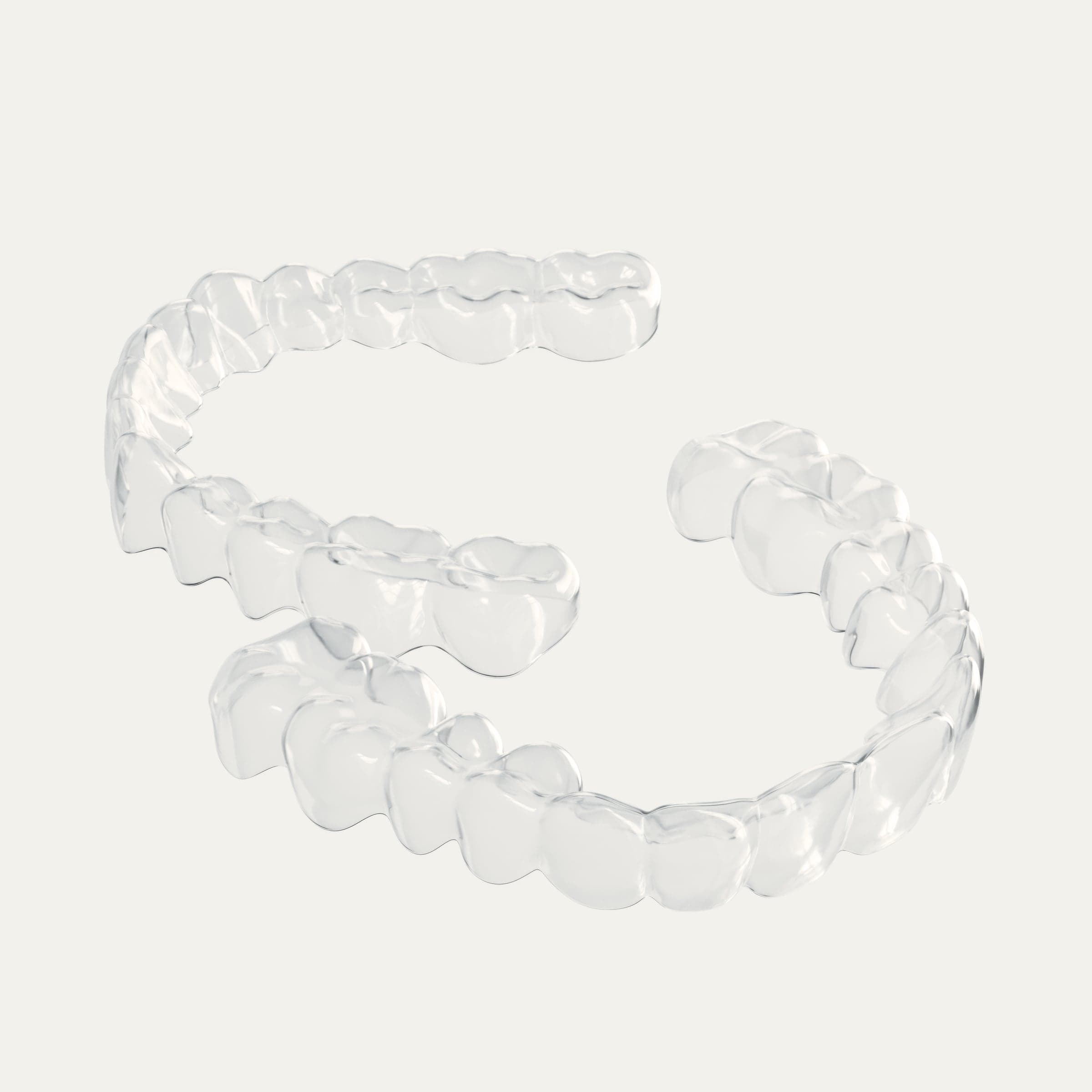
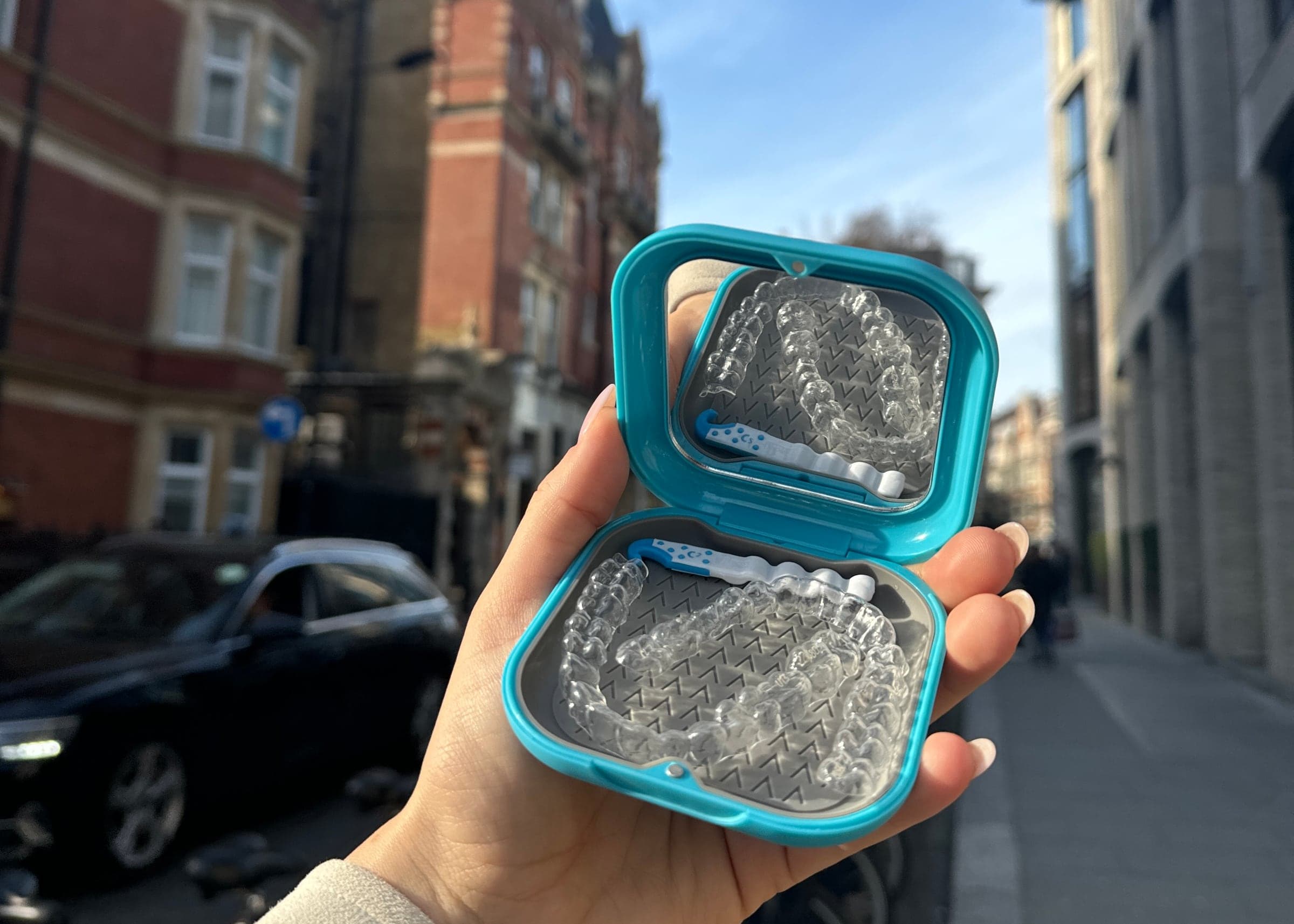
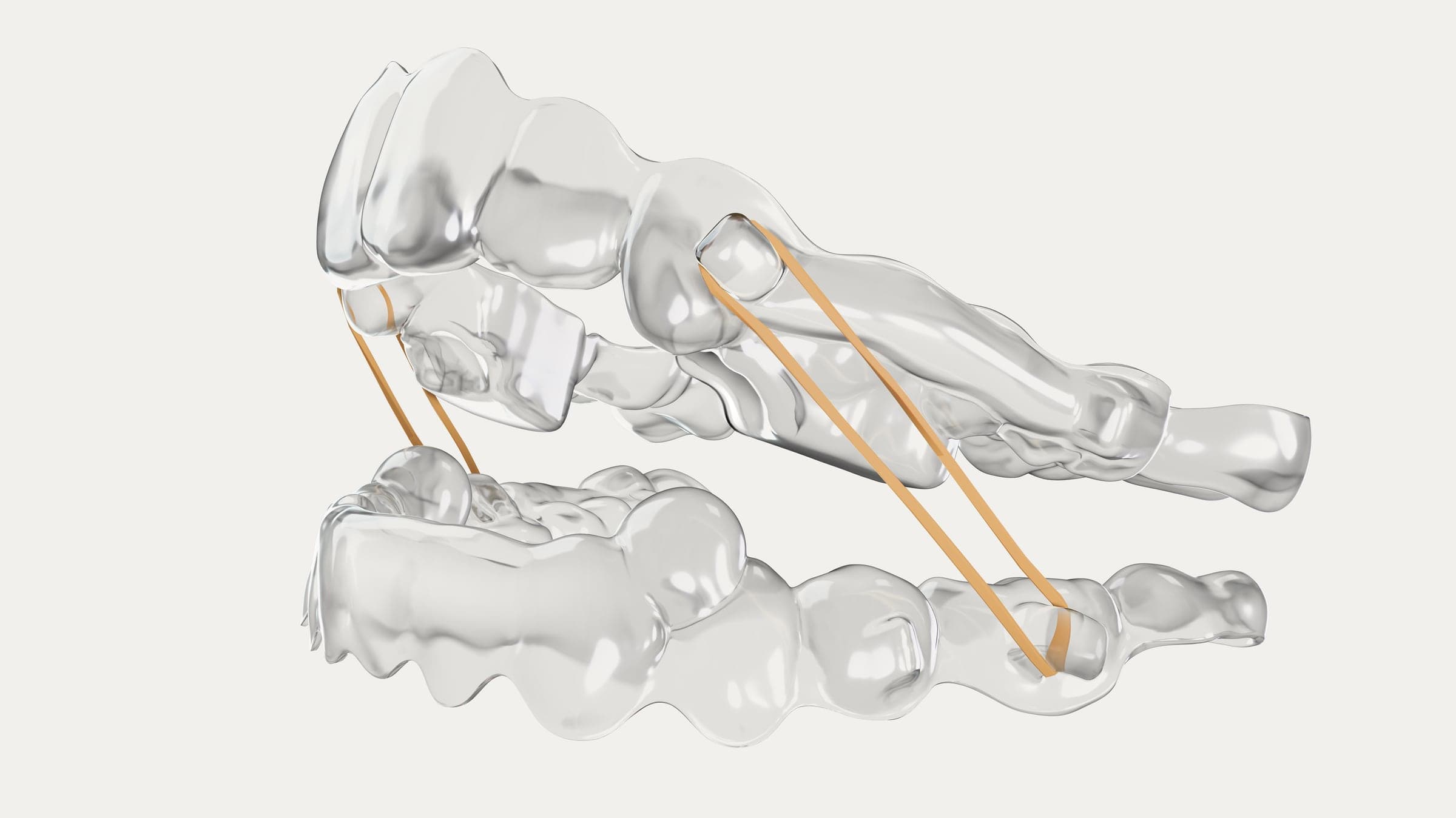
Aligners are thin, transparent plastic trays made individually for your teeth. They are based on a digital 3D scan of your teeth – with no conventional impression material. From this we plan the tooth movement on the computer and show you in advance where the treatment is heading.
You receive a series of trays that you wear one after another. Each tray moves the teeth a little further. For this to work, you wear the aligners for around 22 hours a day and take them out only to eat, to drink (except water) and to brush your teeth.

( On film )
Clear aligners on film.
( At a glance )
What speaks for it.
- 01
Nearly invisible
The transparent trays are hardly noticed in conversation – ideal for work and everyday life.
- 02
Removable
Eat, drink and brush as usual: the trays simply come out for a moment.
- 03
Digitally planned
From the 3D scan to a preview of the result – you see beforehand where it is going.
- 04
Comfortable to wear
Smooth surfaces, no brackets and no wires rubbing against lips or cheeks.
( Good to know )
Who are aligners suitable for?
Aligners are suitable for many misalignments in adults and teenagers. Whether they are the right choice in your case is something we clarify at the consultation. For some findings, fixed braces are the better solution – and we will tell you so honestly.
Your cooperation matters: only trays that are worn move teeth.
- Crowding and overlapping teeth
- Gaps between the teeth
- Mild to moderate bite deviations
- Relapse after an earlier treatment
( Process )
Clear aligners – step by step.
- 01
Consultation & findings
We examine your teeth and discuss your wishes and options.
- 02
3D scan & plan
A digital scan with the 3D intraoral scanner and planning on the computer.
- 03
Wearing the trays
You change the trays according to plan – we check progress regularly.
- 04
Keeping the result
A retainer makes sure your teeth stay in position for good.
( Costs )
What does insurance cover?
Aligner treatment is usually a private service. For children and teenagers who are entitled to orthodontic treatment under statutory insurance, it can be chosen as an alternative for an additional payment, depending on the diagnosis.
Before treatment starts you receive a clear cost plan from us. Private supplementary insurance covers part of the costs, depending on your plan.
Good questions, clear answers
Is your question not listed? Give us a call or ask at your first appointment.
Can you see the trays?
Hardly. The aligners are transparent and fit closely to the teeth. Most people around you will not notice them.
Does the treatment hurt?
In the first days with a new tray many people feel slight pressure – a sign that the teeth are moving. It usually eases after a few days.
How long does aligner treatment take?
That depends on your starting point. After the 3D scan you receive an individual plan with a realistic time estimate.
What happens after treatment?
So that the teeth do not move back, you receive a retainer – a fine wire behind the teeth or a removable tray for the night.
( Other treatments )