Retainers. Keep the result.
After braces or aligners the retention phase begins. A retainer makes sure your teeth stay where they belong.
( Retainers )
Why you need a retainer.
After orthodontic treatment, teeth tend to move back towards their old position. Apart from that, tooth position changes over the course of life anyway. A retainer stabilises the result.
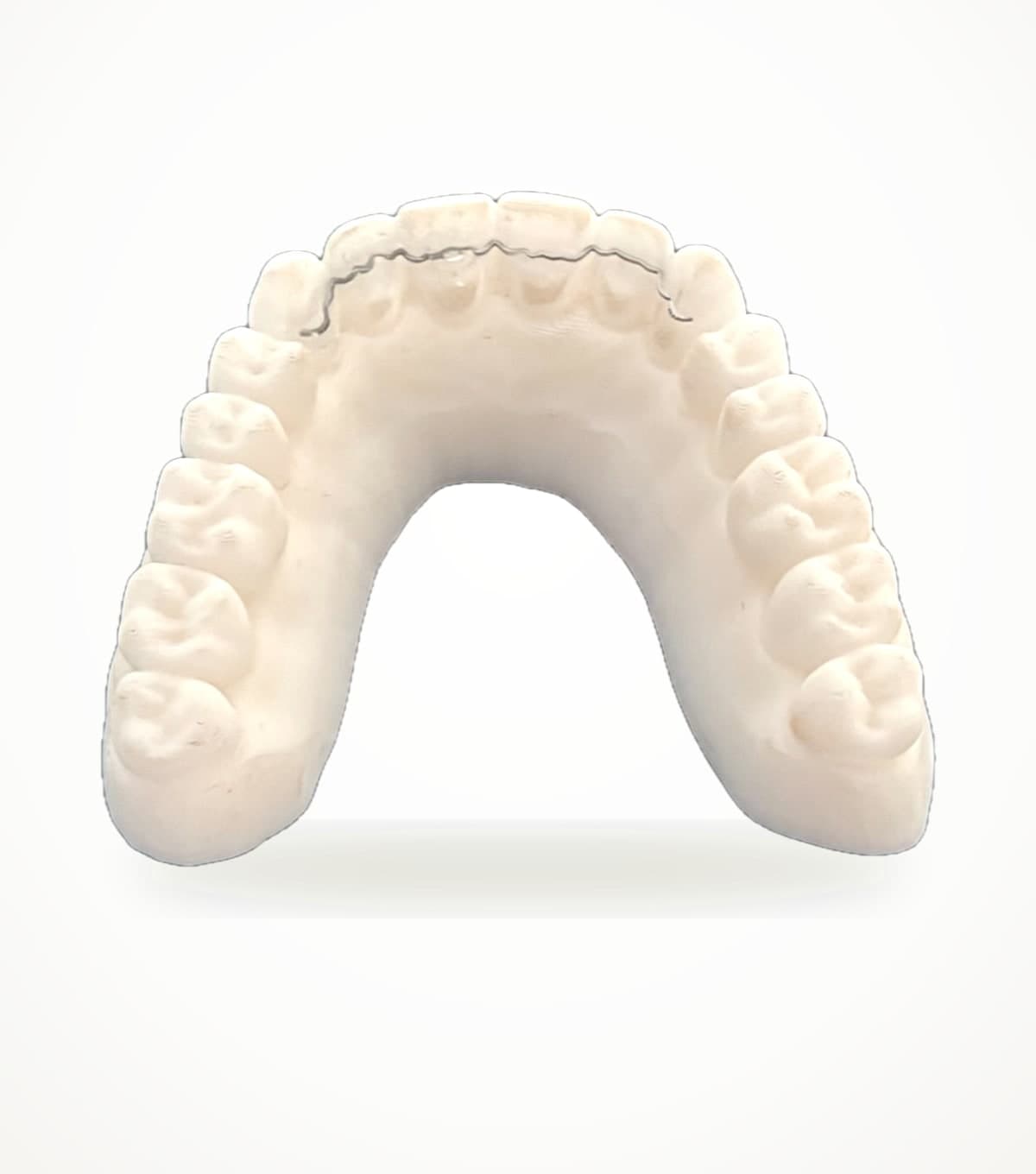
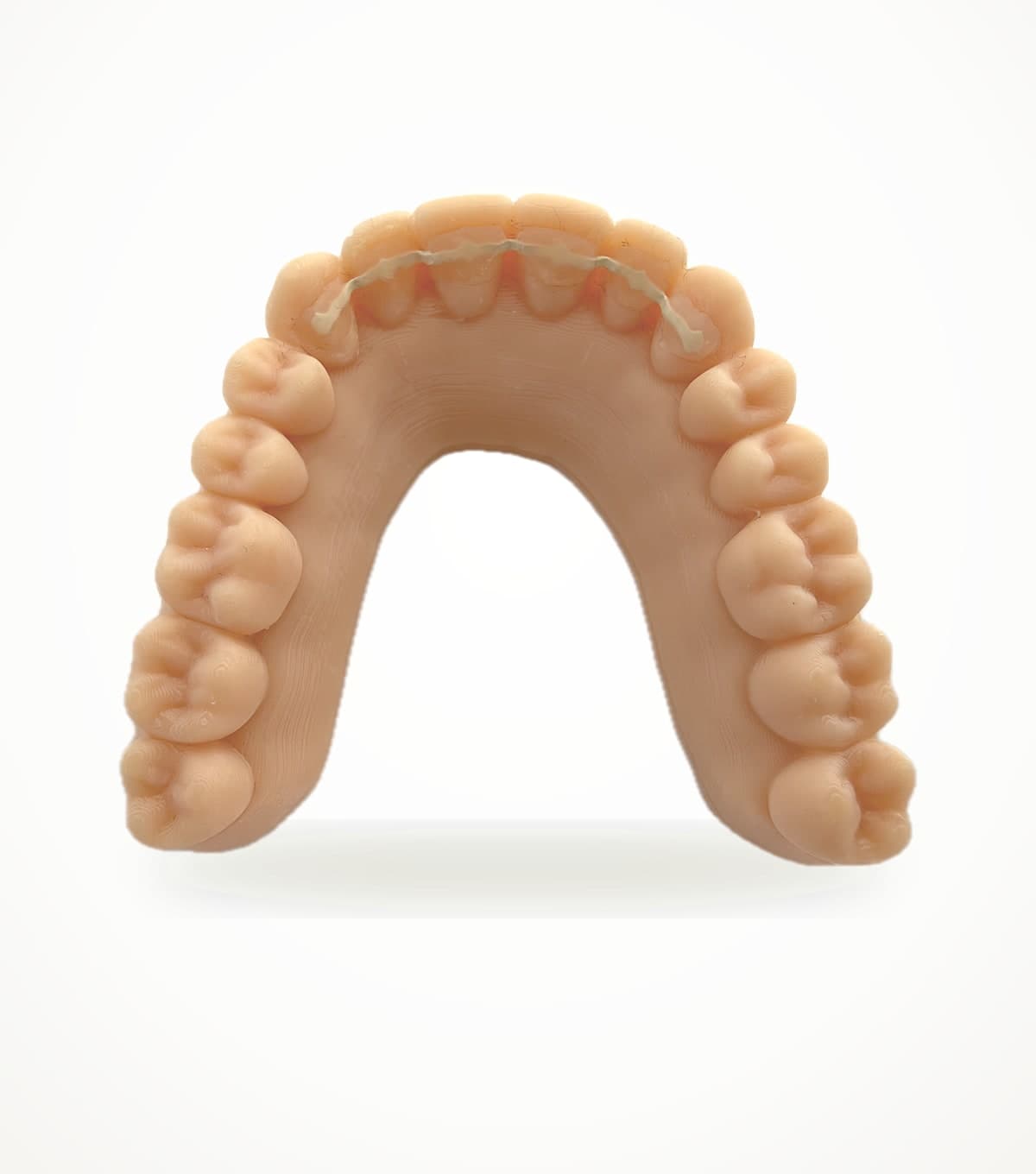
There are two types: a fine wire bonded invisibly to the back of the front teeth, and a removable tray or brace for the night. Our standard fixed retainer is the Ivotain retainer. Depending on your findings, we also use Memotain – a digitally planned, precisely made nickel-titanium retainer – or a conventional wire retainer. Which type – or which combination – suits you is something we discuss at the end of active treatment.
( At a glance )
What speaks for it.
- 01
Invisible from outside
The fixed retainer sits behind the teeth and is not noticed when you speak or smile.
- 02
Protects your result
The retention phase secures what months or years of treatment have achieved.
- 03
Fixed or removable
We use both: fixed retainers and removable retention appliances – matched to your findings.
- 04
Checked regularly
At check-ups we make sure the retainer sits firmly and everything stays stable.
( Good to know )
Good to know: care and check-ups.
A fixed retainer needs a little attention when you clean your teeth. If a bonding point comes loose, you do not always notice right away – so a regular check is worthwhile.
- Clean the spaces along the wire with interdental brushes
- Check regularly with your tongue that the wire sits firmly everywhere
- Wear removable retainers as agreed and rinse them with cool water
- Book an appointment promptly if the wire is loose or broken
( Process )
Retainers – step by step.
- 01
End of treatment
Brackets or aligners have done their job – we plan the retention phase.
- 02
Fitting the retainer
The wire is bonded to fit precisely, or the tray is made from a 3D scan.
- 03
Retention phase
You wear the retainer as agreed – the teeth settle in their new position.
- 04
Check-ups
We check the retainer at longer intervals and repair it if needed.
( Costs )
What does insurance cover?
Which form of retention statutory health insurance covers depends on the treatment and the findings. A fixed retainer is often a private additional service.
We tell you the costs in advance. We also discuss the repair or replacement of a retainer openly with you.
Good questions, clear answers
Is your question not listed? Give us a call or ask at your first appointment.
My retainer has come loose – what now?
Please call us promptly. As long as the wire does not sit firmly everywhere, teeth can shift. If a loose wire end bothers you, a little protective wax helps until your appointment.
How long do I have to wear a retainer?
The longer, the more stable the result stays. How long it makes sense in your case is something we discuss with you in person.
Does the wire get in the way when speaking or eating?
After a short settling-in period most people hardly feel it any more. You should avoid biting off very hard foods with your front teeth.
I was treated elsewhere – can I still come to you?
Yes. We check, repair or replace your retainer even if the treatment took place at another practice.
( Other treatments )